
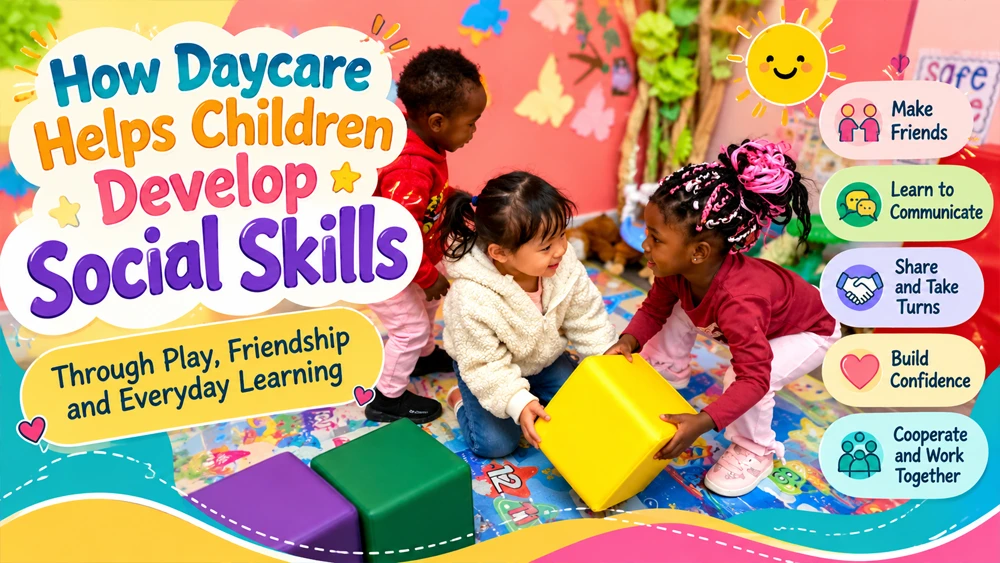
Learning to connect, communicate, and build friendships is an important part of early childhood development. For young children, everyday interactions provide opportunities to understand others, express feelings, solve small problems, and develop confidence. A quality daycare environment can support these skills through play, guided activities, and positive relationships.
At CityKidz Daycare in Edmonton, children have opportunities to learn, explore, interact with others, and develop important skills as they grow.
Why Are Social Skills Important in Early Childhood?
Social skills help children interact with the people around them. These skills begin developing during infancy and continue to grow throughout the early years.
As children spend time with peers and caring adults, they gradually learn how to:
- Communicate their needs, thoughts, and feelings.
- Share toys and take turns during activities.
- Listen to others and follow simple instructions.
- Recognize different emotions and respond with empathy.
- Cooperate during group play and activities.
- Build friendships and develop a sense of belonging.
Children develop these abilities at different rates. With patience, encouragement, and age-appropriate experiences, they can gradually become more comfortable interacting with others.
1. Learning to Share and Take Turns
Sharing can be challenging for young children, particularly when they are excited about a favourite toy or activity. These moments can become valuable learning opportunities.
During supervised play, children can practise waiting for a turn, asking to use a toy, and participating in activities with their peers. Educators can model positive language and help children work through disagreements calmly.
For example, when two children want the same building blocks, an educator might encourage them to take turns or work together to build something.
These small experiences help children begin to understand cooperation, patience, and respect for others.
2. Developing Communication Skills
Communication involves much more than speaking. Young children learn to listen, use gestures, express emotions, understand instructions, and respond to others.
Everyday daycare activities can encourage communication naturally. Storytime, music, pretend play, conversations, and group activities give children opportunities to practise expressing themselves.
Educators can support this development by listening carefully, introducing new words, asking simple questions, and encouraging children to communicate in ways appropriate to their age.
Over time, these experiences can help children feel more confident expressing their needs and ideas.
3. Building Friendships Through Play
Play gives children a natural way to connect with others. Whether they are building with blocks, creating artwork, exploring toys, or participating in outdoor activities, children can discover shared interests and learn to enjoy being part of a group.
Some children begin by playing alongside other children before gradually joining shared activities. Both experiences are normal parts of early social development.
Educators can help children connect by introducing simple group games, encouraging cooperation, and creating opportunities for positive interactions.
At CityKidz Daycare, play-based learning provides opportunities for children to explore, interact, and build relationships in a supportive environment.
4. Understanding Feelings and Developing Empathy
Young children are still learning to recognize and manage their emotions. They may feel excited, frustrated, disappointed, or overwhelmed as they navigate new experiences.
Caring adults can help by naming emotions, listening to children, and showing them appropriate ways to respond.
For example, an educator might say, “You look upset because you wanted a turn. Let’s find a way to solve this together.”
Simple conversations like these help children begin to recognize feelings in themselves and others. With guidance and practice, they can gradually learn patience, empathy, and emotional regulation.
5. Learning Cooperation and Teamwork
Group activities help children discover how to work with others toward a shared goal.
Building a tower together, completing a puzzle, participating in a music activity, or helping tidy up toys can encourage cooperation and problem-solving.
Children learn that everyone can contribute in different ways. They also begin to understand the importance of listening, following simple routines, and respecting other people’s ideas.
These experiences can support confidence and help children feel that they belong to a community.
6. Developing Independence and Confidence
Social development and independence often grow together. When children have opportunities to make simple choices, try activities, ask for help, and interact with others, they can begin to trust their own abilities.
A supportive daycare environment gives children opportunities to practise everyday skills at a pace suited to their developmental stage.
Educators can encourage children to try new activities, communicate their preferences, and celebrate their efforts rather than expecting perfection.
Small achievements, such as joining a group activity or asking another child to play, can be meaningful steps toward greater confidence.
How Parents Can Support Social Skills at Home
Children benefit when the positive messages they experience at daycare are reinforced at home. Parents do not need complicated activities to help their children develop social skills.
Here are a few simple ideas:
- Practise taking turns: Play simple games that involve waiting and sharing.
- Talk about feelings: Help your child identify emotions in everyday situations and storybooks.
- Encourage conversation: Ask open-ended questions and give your child time to respond.
- Model kindness: Demonstrate listening, respectful communication, and helping others.
- Arrange opportunities to play: When appropriate, let your child interact with other children in a comfortable setting.
- Celebrate effort: Recognize moments when your child communicates clearly, cooperates, or shows consideration for someone else.
Remember that every child develops differently. Some children eagerly join group activities, while others need more time to feel comfortable. Gentle encouragement and consistent support can make a difference.
Choosing a Daycare That Supports Social Development
When exploring childcare options, parents may want to ask how educators encourage positive interactions, manage disagreements, support emotional development, and include children in group activities.
It is also helpful to understand how the daycare communicates with families about a child’s experiences and progress.
Look for an environment where children are treated with respect, activities are appropriate for their developmental stages, and educators respond to children’s individual needs.
You can learn more about the CityKidz Daycare programs and explore the Parent Information page to understand the childcare experience.
Discover Learning and Growth at CityKidz Daycare in Edmonton
Early childhood is a time of discovery. Through play, supportive relationships, and everyday interactions, children can practise communicating, cooperating, expressing feelings, and building friendships.
At CityKidz Daycare, children can explore age-appropriate learning experiences in a caring environment designed to support their development.
If you are exploring childcare options for your family, we invite you to learn more about our programs, visit our centre, and speak with our team.
Ready to learn more?
- Explore our daycare programs.
- Review fees and registration.
- Book a tour to see the environment and ask questions.
Give your child opportunities to learn, connect, and grow—one little step at a time.
CityKidz Daycare — Edmonton, Alberta
Website: https://citykidzdaycare.com/
Phone: +1-780-701-3421
Frequently Asked Questions
How does daycare help children develop social skills?
Daycare gives children opportunities to interact with peers and caring adults. Through play, group activities, and everyday routines, they can practise communication, sharing, cooperation, and friendship-building.
At what age do children start developing social skills?
Social development begins in infancy and continues throughout childhood. The skills children practise depend on their age, experiences, temperament, and developmental stage.
What activities help children build social skills at daycare?
Age-appropriate activities may include pretend play, building with blocks, storytime, music, art, outdoor play, simple group games, and collaborative tasks.
How can parents encourage social development at home?
Parents can encourage social development by playing turn-taking games, talking about feelings, modelling kindness, making time for conversations, and providing appropriate opportunities to interact with other children.
How can I learn more about CityKidz Daycare programs?
Visit the CityKidz Daycare website, explore the available programs, or contact the centre at +1-780-701-3421 to ask questions and arrange a tour.